
ACFT vs AFT: Differences, and Replacement Guide

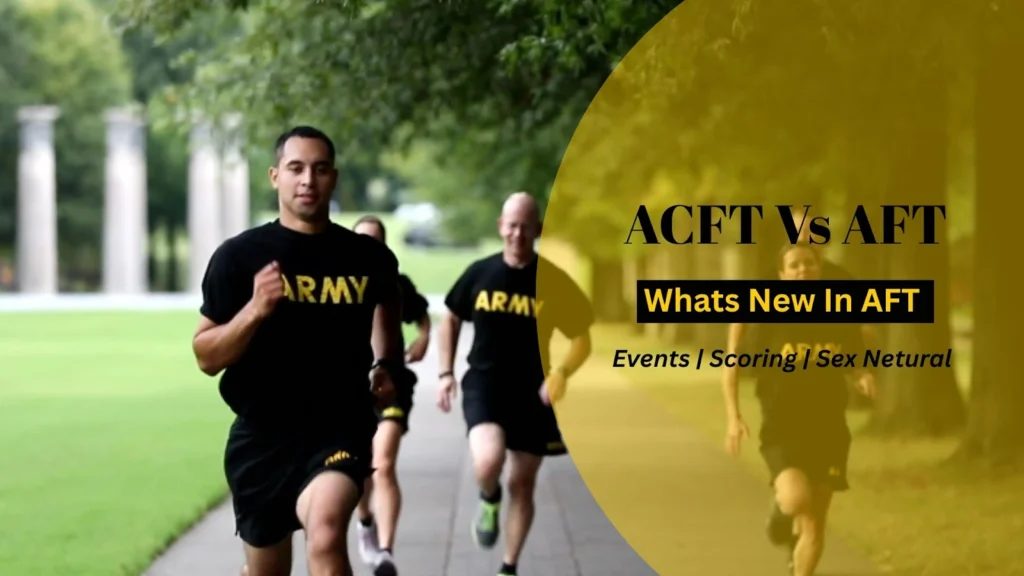
The Army Combat Fitness Test (ACFT) was replaced by the Army Fitness Test (AFT) with the elimination of the Stand power test. The AFT consists of five events, including max deadlift, hand-release push-ups, sprint-drag-carry, plank, and a two-mile run. It uses universal sex-neutral scoring for combat MOS soldiers and age/gender norms for non-combat roles. Below is the detailed guide about ACFT Vs AFT.
Why is ACFT Replaced By AFT?
After the feedback and data analysis for 18 months, the US Army replaced the ACFT with the Army Combat Fitness Test. The AFT comes with five events by eliminating the power throw test. The AFT emphasises war fighting readiness, reduces injuries, and introduces sex-neutral scoring for 21 combat military occupational specialities (MOS). The test is now comparatively easy and with low injury risk. However, you need a proper AFT diet and workout plan for AFT preparation.
Here is the detailed guide on why AFT replaces ACFT.
Data Analysis
The USA Army analysed the data from 18 months to make useful modifications to the Test. These changes are introduced to minimize the injury risks in testing and measure what truly matters in combat readiness and soldier health.
Reduce Injury
The standing power throw causes a lot of injuries due to the weight and pressure on muscles and joints. Therefore, this event was removed to minimize the injury risks. In this way, soldiers remain fit throughout the event and maximize their chance to pass the AFT.
Improved Combat Skills
The AFT events focus on functional fitness skills that improve the combat skills of soldiers, such as lifting, sprinting, carrying, and core strength. The Army Combat Test helps the soldier to achieve battlefield skills.
Sex Neutral Scoring
The AFT uses one standard for all soldiers in combat jobs. It doesn’t matter if you are a man or a woman. Everyone has to meet the same high fitness level. This makes things fair and equal. It also ensures all soldiers are ready for tough combat work. To check your fitness level easily, you can use an AFT calculator to track your scores and progress.
ACFT Vs AFT
The US Army made major changes in the Test to make enough improvements. Here is the simple guide that would clarify the difference between ACFT and AFT:
Feature | ACFT (Army Combat Fitness Test) | AFT (Army Fitness Test) |
Launch Date | Introduced in 2020 | Replaced ACFT on June 1, 2025 |
Number of Events | Six | Five |
Events | Deadlift, Standing Power Throw, Sprint-Drag-Carry, Hand-Release Push-ups, Hanging Leg Tuck, Two-mile Run | Deadlift, Sprint-Drag-Carry, Hand-Release Push-ups, Plank, Two-mile Run |
Power Throw Event | Included (Standing Power Throw) | Removed to reduce injury risk |
Scoring | Sex- and age-neutral universal scoring | Universal sex-neutral for combat roles; age/gender normed for others |
Focus | Overall combat fitness emphasizes strength, power, endurance, and agility | Combat readiness with injury reduction and realistic standards |
Injury Risk | Higher due to power throw and some event techniques | Lower by removing high-injury-risk events |
Targeted MOS Standards | One standard for all | Different standards for combat vs non-combat MOS roles |
Testing Frequency | Semiannual | Adjusted frequency based on Army guidelines |
Benefits of AFT replacing ACFT
The USA Army takes a deep analysis and then replaces the ACFT with AFT. Here are some beneficial outcomes of this update:
FAQs
Conclusion
In July 2025, the US Army replaced the ACFT with the AFT. The Army fitness test comes with five events, eliminating the Stand Power Throw. This step was taken to create a safer, fairer, and more combat-ready fitness test.
The difference between ACFT and AFT lies mainly in event types and scoring standards. AFT removes high-injury-risk events and uses sex-neutral scoring for combat roles. This change ensures all soldiers meet real battlefield fitness demands while reducing injuries. Above, I have provided a detailed guide about ACFT Vs AFT. If you have any issues or queries related to it, feel free to contact us.